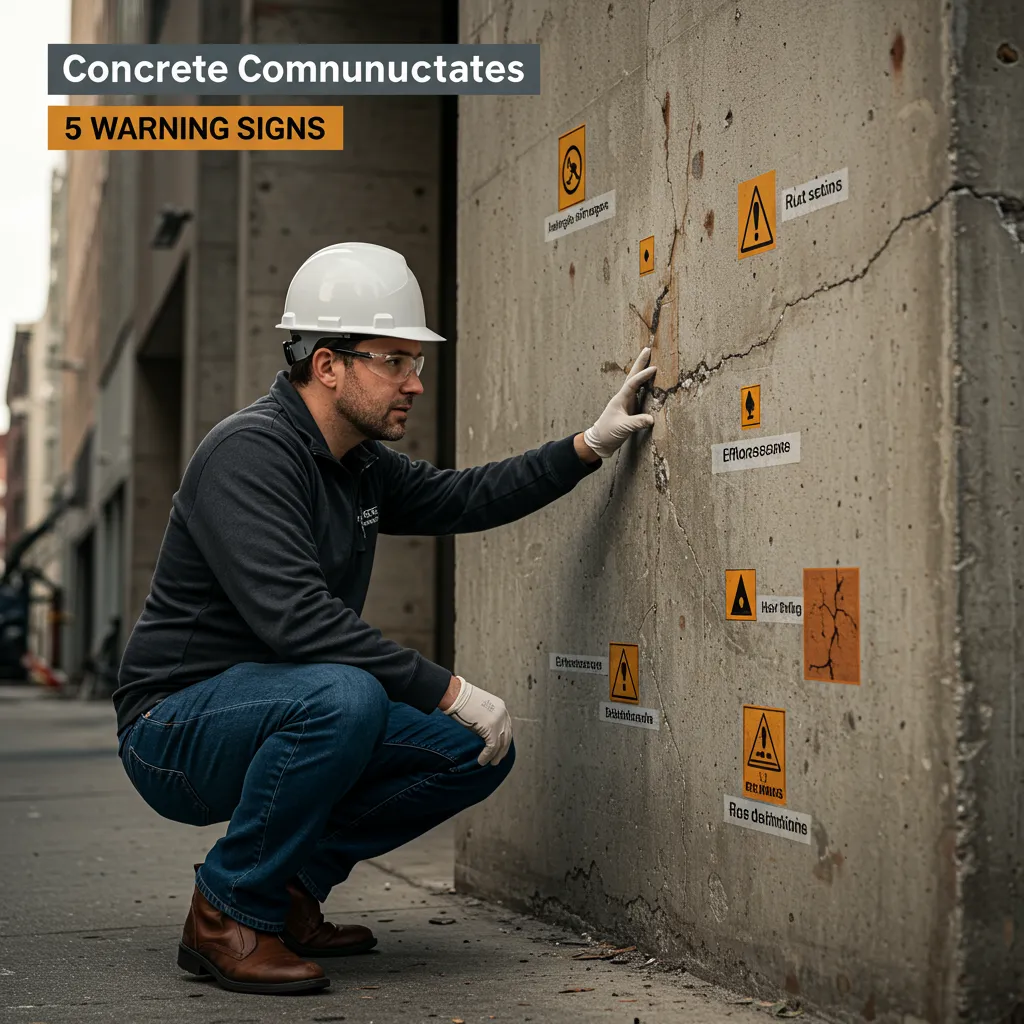
5 Signs Your Commercial Concrete Is Telling You Something
Concrete is one of the most durable surfaces in commercial property management. It's also one of the most ignored — until it's failing. The problem is that concrete communicates long before it cracks. Most property managers just don't know what to look for.
Here are five signs your concrete is under stress and what each one actually means for your maintenance timeline.
1. Surface Scaling and Flaking
If you're seeing thin layers of concrete peeling away from the surface — especially in drive lanes, loading docks, or any area exposed to deicing salts or heavy vehicle traffic — that's scaling. It's not cosmetic. Scaling is the outer layer of the concrete matrix separating from the body of the slab, usually caused by freeze-thaw cycling, chemical exposure, or an original finishing issue.
What it means: The surface layer is compromised. Water is now penetrating faster and the degradation accelerates. Professional surface cleaning and sealing can slow this process significantly, but the window to act before structural repair is required is limited.
2. Oil Saturation Zones
Dark, spreading stains in high-traffic vehicle areas aren't just ugly — they're a liability and a structural concern. Oil and petroleum products break down the binders in concrete over time. Left untreated, you're looking at soft spots, cracking, and eventual surface failure in those zones.
What it means: Hot-water degreaser treatment followed by sealing should be scheduled before those zones expand. This is a maintenance issue, not a cosmetic one.
3. Biological Growth in Joints and Cracks
Green or black growth along expansion joints, near downspouts, or in any low-spot where water pools isn't just algae. It's an indicator that water is dwelling and organic material is establishing roots. In concrete joints, root intrusion from vegetation accelerates cracking.
What it means: Pressure washing with appropriate biocide treatment clears the surface. But if growth is recurring in the same spots, drainage needs to be evaluated.
4. Efflorescence (White Mineral Deposits)
White, chalky streaking on concrete or masonry walls, retaining structures, or curbs is efflorescence — soluble salts migrating to the surface as water moves through the material. It's a moisture indicator, not just a staining problem.
What it means: Water is moving through your concrete. This could be a grading issue, a failed joint, or compromised sealer. Surface treatment removes the deposit; the underlying moisture source needs to be identified.
5. Uniform Surface Darkening on Horizontal Slabs
If your walkways, plazas, or parking deck surfaces are uniformly dark and dull where they used to be light, that's years of embedded grime, atmospheric soiling, and surface contamination compressing into the pores of the concrete.
What it means: The surface is sealed with contamination, which means it's no longer breathing or draining the way it should. A professional cleaning restores both appearance and function.
Regular Maintenance Buys Time
Commercial concrete is a long-term asset. The property managers who protect it longest aren't spending more — they're spending smarter and earlier. Annual or bi-annual professional cleaning and inspection extends service life and defers major repair costs.
Curb Elite Solutions provides commercial concrete assessment and restoration services for property managers who want the honest picture on their surfaces.
Schedule your site assessment today. We'll tell you exactly what's happening and what it'll take to get ahead of it.