Stop Green-Black Film on Oklahoma Homes
Soft Washing, Pressure Washing, Oklahoma Homes, Surface Cleaning
The Green-Black Film on Your Oklahoma House: Why It Keeps Coming Back (and How to Stop It)
If the shaded side of your Oklahoma home grows a green-black film every year, you are not alone. Our climate makes the perfect petri dish for algae, mildew, and other organics. You can blast it off with a pressure washer and watch it disappear in seconds—then watch it return by the next season. There is a simple reason for that, and it has everything to do with how you clean, not just how hard you spray.
What That Green-Black Film Really Is
On the north or shaded sides of Oklahoma homes, that green-black film is usually a mix of algae, mildew, mold spores, and general organic grime. Our humid springs, stormy summers, and dusty winds give it everything it needs: moisture, shade, and food. Siding, stucco, brick, and even painted wood all collect airborne particles that these organisms latch onto.
Think of it like weeds in a lawn. The part you see is only the top growth. The real problem is the roots and seeds you do not see. With exterior growth, those “roots” are microscopic cells and spores buried in pores, tiny cracks, and surface texture. If you only remove what you can see, you have not solved the problem; you have just given it a haircut.
Why Force Alone Only Fixes the Problem for One Season
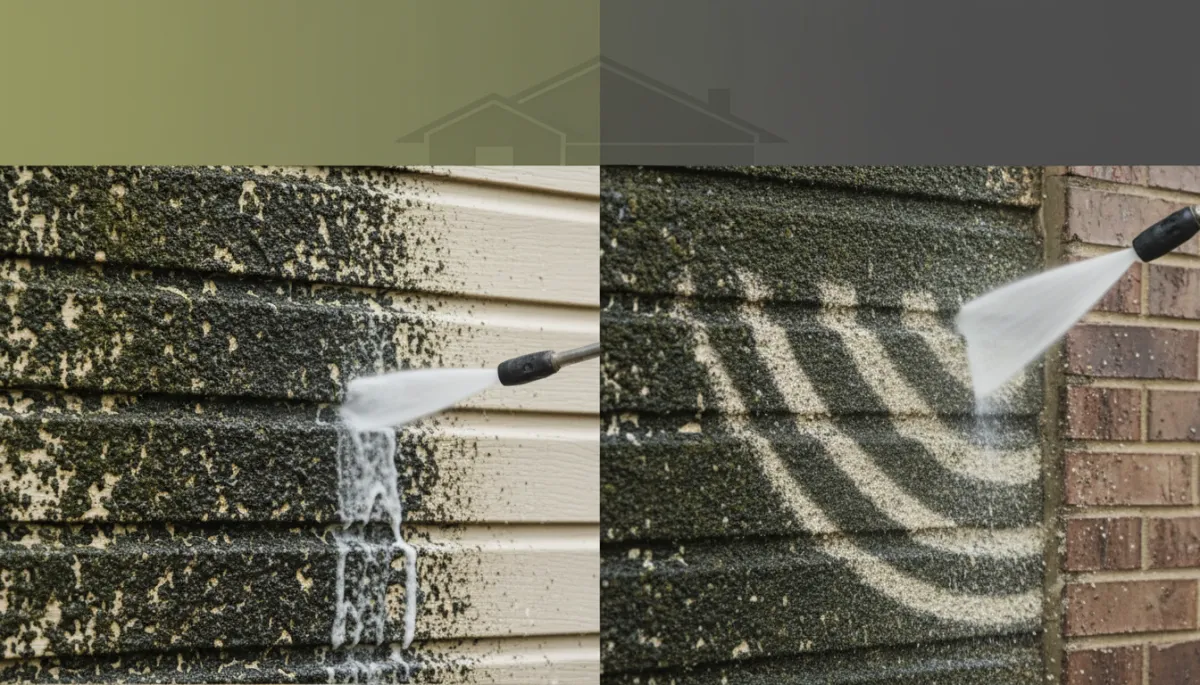
High-pressure water is great at one thing: removing whatever is loose on the surface. When you point a pressure washer at green-black film, it peels away the visible layer. It feels satisfying. It looks clean. But force alone does not disinfect, and it does not reach every pore and crevice where the growth lives.
Here is what really happens when you rely on pressure only:
You strip off the top layer of algae and mildew but leave live cells behind in the surface texture.
You may actually spread spores farther as they get blown around by the spray.
You can damage softer materials, opening up more pores and cracks where moisture and growth can take hold.
That is why the same green-black film is back by the next season, especially on shaded walls, north-facing elevations, and areas near trees or sprinklers. The growth never really left; it just went into hiding and waited for our Oklahoma humidity to kick in again.
Pressure alone removes what you see but leaves behind live growth in the pores.
Pressure Washing vs. Soft Washing: What’s the Real Difference?
Around Oklahoma City, people lump everything into “pressure washing.” In reality, there are two very different approaches to surface cleaning: Pressure Washing and Soft Washing. Both have their place. The key is knowing which belongs where.
What Pressure Washing Does Well
Pressure Washing uses high-pressure water—often 2,500–4,000 PSI—to physically blast away dirt, mud, loose paint, and heavy buildup. Done correctly and in the right places, it is ideal for:
Concrete driveways and sidewalks
Some masonry retaining walls in good condition
Metal surfaces that can handle force
It is a mechanical tool. It scrapes with water. It does not sanitize, and it does not soak into crevices to kill growth at the root level.
How Soft Washing Works (and Why It Lasts Longer)
Soft Washing is a different process altogether. Instead of relying on brute force, it uses:
Low pressure – typically similar to a garden hose, just enough to apply and rinse.
Cleansing solution – a mix designed to break down organics like algae, mildew, and mold, plus surfactants to help it cling and penetrate.
Dwell time – the solution sits on the surface long enough to actually kill and loosen the growth.
Gentle rinse – low-pressure water washes away the dead growth and residue.
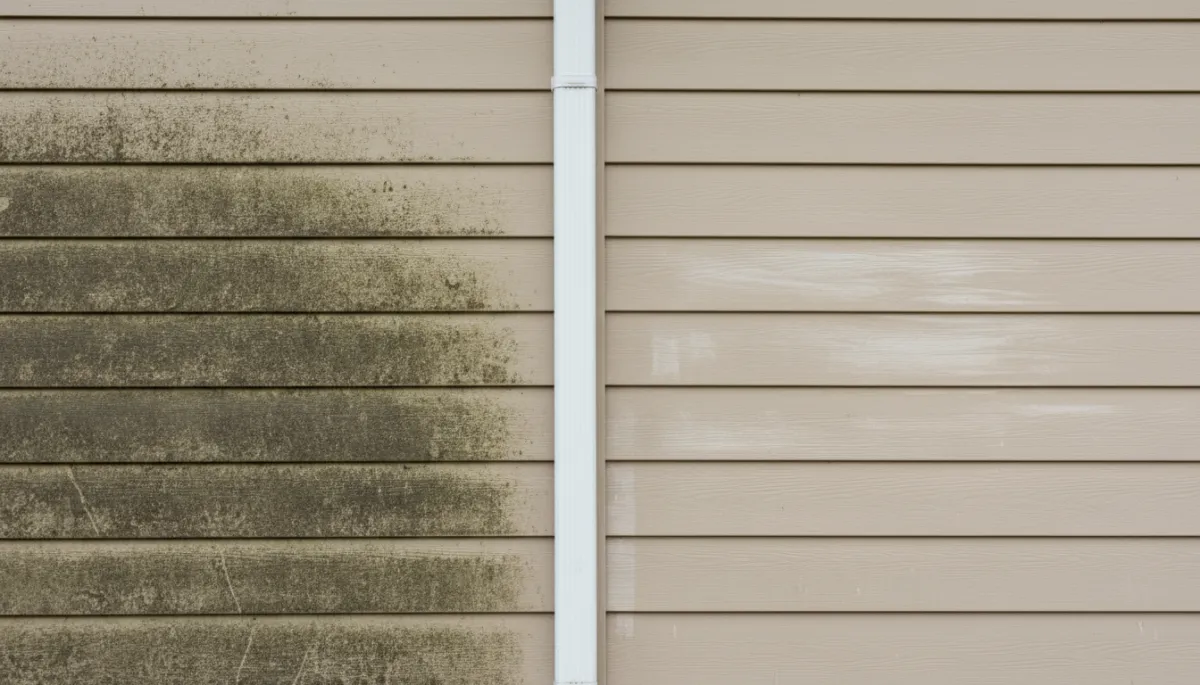
Done right, Soft Washing does two things that pressure alone cannot: it kills the growth, and it reaches into pores and gaps without tearing up the surface. That is why a properly soft-washed wall on Oklahoma homes stays cleaner longer than a wall that was just blasted with a wand.
Soft washing uses chemistry and dwell time instead of brute force to clean safely.
Surfaces That Should Never See High Pressure
Some materials on Oklahoma homes can handle a pressure washer. Many cannot. If you crank up the PSI on the wrong surface, you will not just remove the green-black film—you will remove part of the house with it, or drive water where it should never go. Here are the main “never pressure wash” surfaces:
Painted wood – High pressure can cause furring (raised fibers), strip paint unevenly, and force water behind boards, inviting rot and peeling.
Stucco – The surface can crumble, chip, or crack, and water can be driven into the wall system, leading to hidden moisture problems.
Roof shingles – High pressure strips off the protective granules, shortens roof life, and can break the seal between shingles. Roofs should be soft washed only.
Older masonry and brick – Mortar joints can be eroded, and softer brick faces can be etched or blown apart, especially on historic homes.
Screens and window assemblies – Screens can tear or stretch, and water can be forced past seals into walls and window frames.
Anywhere water can be driven behind a material – Lap siding, trim details, soffits, and any place with gaps or overlaps should be treated with low pressure and controlled angles.
⚠️ Warning: If a contractor wants to “blast that off real quick” with a turbo nozzle near your siding, stucco, or roof, that is your cue to hit pause.
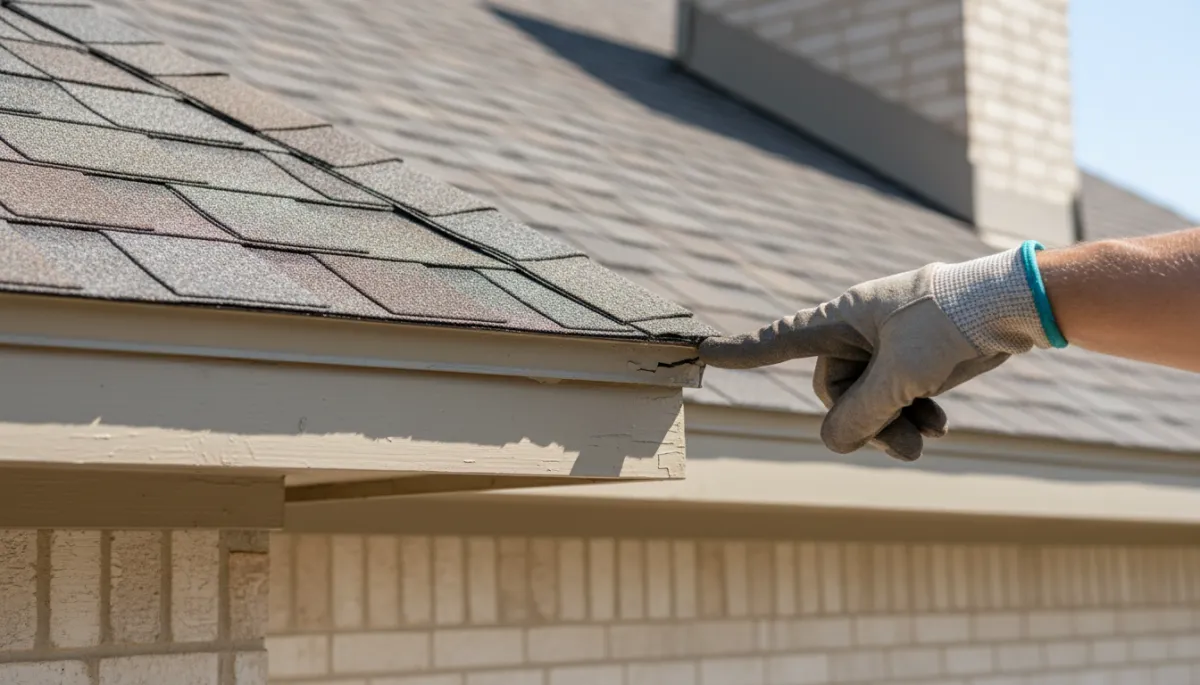
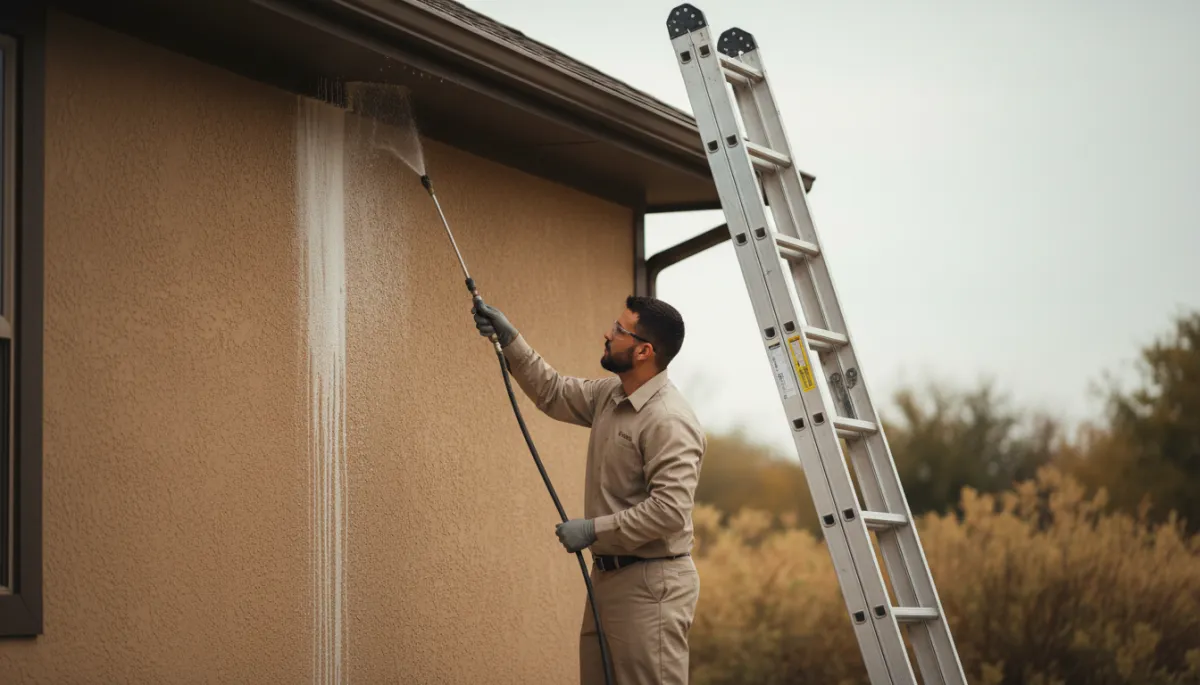
Many exterior materials clean best with low pressure to avoid costly damage.
How to Spot a Job Done Wrong After the Contractor Leaves
You do not always see the damage while the water is flying. Some issues show up once everything dries out. Here is what to look for after any Pressure Washing or Soft Washing job on your property:
Furring on wood – Run your hand along painted wood. If it feels fuzzy, with raised fibers sticking up, the pressure was too high or too close.
Zebra striping – On concrete or siding, look for light and dark stripes that match the wand pattern. That means inconsistent distance or pressure and poor technique.
Lost mortar – On brick or block, check joints for missing or gouged mortar, especially along edges where a nozzle may have been too close.
Shingle granules – After a roof “cleaning,” look in gutters and at the base of downspouts for piles of sand-like granules. That is your roof’s protective layer. If it is on the ground, it is not on the shingles anymore.
Fast regrowth – If the green-black film starts to reappear within a few weeks or the next wet spell, the job was likely done with pressure only, with little or no effective solution or dwell time.

Stripes, fuzzed wood, and missing mortar are classic signs of a bad wash job.
One Simple Question to Ask Any Contractor Before They Start
You do not need to be an expert in PSI, nozzles, and chemical ratios to protect your home. You just need to ask better contractor questions. Before anyone cleans your siding, roof, or other delicate surfaces, ask them this, and do not help them with the answer:
“Exactly how will you clean each surface on my home—what pressure, what solution, and how long will it dwell before you rinse?”
If they cannot clearly explain the difference between Soft Washing and Pressure Washing, specify which method goes on which material, and mention solution, dwell time, and a low-pressure rinse, they are guessing. Your house is not the place for guesswork.
Why Curb Elite Solutions LLC Treats Your Home Like a System, Not a Target
At Curb Elite Solutions LLC, we spend a lot of time on ladders and in backyards around the Oklahoma City Metro. We have seen what happens when someone treats a house like a concrete pad and goes to town with a big box store pressure washer. It keeps us busy with repair calls, but we would rather keep your place intact the first time.
Our approach is simple and not very glamorous: we answer the phone, we show up when we said we would, and we finish the job the right way. That usually means:
Soft Washing shaded siding, stucco, and roofs with the correct solution and dwell time to stop the green-black film at the source.
Using controlled Pressure Washing only where it belongs, like driveways and hard-wearing concrete.
Adjusting technique for older masonry, painted wood, and other sensitive surfaces so we clean them without chewing them up.
If you are tired of the same green-black film showing up every season, or you just want to be sure your next cleaning does not damage what you are trying to protect, we are local, owner-operated, and used to Oklahoma weather and building styles. One call covers most of your exterior and basic maintenance needs.
📌 Key Takeaway: Force removes what you see. Soft Washing, done correctly, removes what is actually growing—and keeps it from coming right back.
Ready to stop fighting the same stains every year and protect your siding, roof, and masonry at the same time? Get a Free Property Assessment from Curb Elite Solutions LLC and we will walk your property, explain exactly what needs Soft Washing versus Pressure Washing, and answer that one important question before any work starts.